Analyze the fundamental differences between SEO Titles (TITLE tags) for search exposure and Blog Titles (H1 tags) for user experience. This guide explores why these two titles should be written separately, how to properly craft blog titles, and methods to enhance search optimization performance.
Balancing SEO and User-Friendly Titles in Blog Writing
When writing blog posts, careful consideration must be given to how to write blog titles. Post titles and SEO titles are crucial elements in search optimization. SEO titles are used for search engine exposure, while post titles are tailored for the user. Confusing the two can result in a title that is unfriendly to both users and search engines.
The portal-driven environment of blogging must be approached with caution, as it can hinder fair competition and prevent qualitative improvement.
When creating content, the method of writing blog titles requires careful deliberation. The title of a post is the core summary of the entire content and the part that has the greatest impact on search results.
However, when writing these blog titles, people often mistake SEO titles for post titles and vice versa. Common mistakes include writing a post title when an SEO title is required, and writing an SEO title when a post title is more appropriate.
Differences and Usage of SEO-Optimized Titles vs. User-Friendly Post Titles
It is often forgotten that the title of a post and the SEO title are different when writing a blog title. Since the post title is usually used as the SEO title, many naturally assume they are one and the same. However, these two are clearly distinguished by their purpose and the HTML tags applied to them.
Distinction of HTML Tag Formats: SEO Titles vs. Post Titles
- Post Title: Primarily uses the H1 tag and is often applied visually to the body of the post. This is the first title seen by a user upon entering the page.
- SEO Title: Uses the TITLE tag and is primarily applied to the HEAD section. This is the title exposed on Search Engine Results Pages (SERPs).
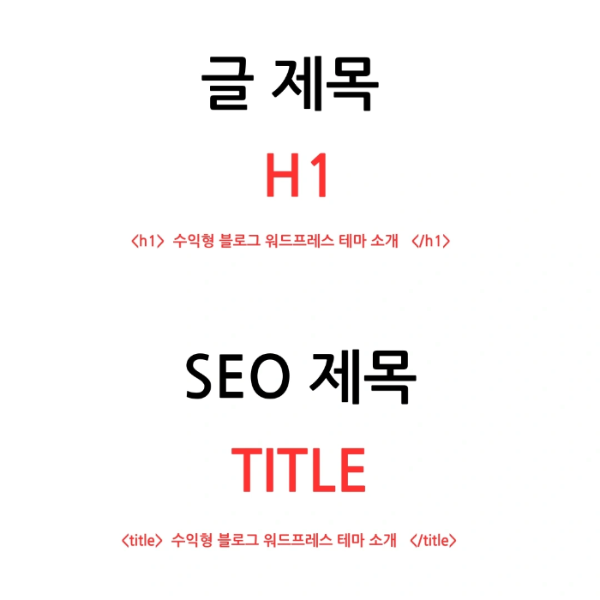
Purpose-driven Differences between SEO Titles and Post Titles
1. SEO Title: The title of a post exposed through search engines (Goal: High search visibility and click-through rate)
2. Post Title: The title exposed to users visiting the post page (Goal: Providing a clear summary of the content)
Blogs often use the post title as the SEO title simply for the operator’s convenience. In such cases, there are many instances where one has no choice but to write a post title that is optimized for SEO search.
This can result in a title that is unfriendly to humans (e.g., a title consisting only of keywords).
When using the SEO title and post title identically, more care is required. Sometimes people get confused and write titles that are only friendly to humans.
This can result in a title that is unfriendly to SEO (e.g., titles with missing keywords or vague meanings).
Strategic Utilization of SEO Titles and Post Titles
SEO titles are mainly written and applied as search-optimized titles for sites and blogs that rely heavily on search exposure. Conversely, utilizing an SEO title as a post title can be more effective in a portal site environment where users choose from various exposed sites rather than through direct search. The key is to clarify the role of the title according to the exposure scenario.
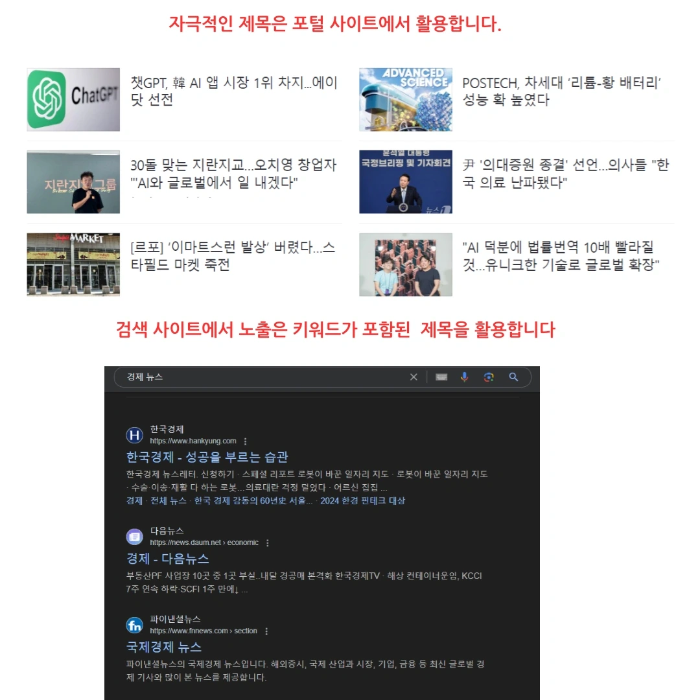
Exposure and Choice: When conceiving a title after writing a post, one must determine whether it is for a portal site or for search and select a title accordingly. I believe this judgment is related to the direction pursued by the operator. However, writing search-oriented content with a portal-oriented title should be reconsidered in terms of click-through rate (CTR) and search exposure efficiency.
Is it advantageous for search optimization to set the SEO title and post title differently?
Yes, it can be advantageous. The most ideal SEO strategy is to use search keywords intensively in the SEO title (TITLE tag) to increase search ranking, while writing the post title (H1 tag) in a way that clearly explains the content and arouses the user’s interest to lower the bounce rate.
What is the most important SEO element when writing a TITLE tag?
The TITLE tag must include core keywords of the content, and search engines perceive keywords as more important when placed toward the beginning of the title. Also, if the title is too long, it may be cut off in search results, so it is best to keep it within about 50 to 60 characters.
What should I do if my blog platform only allows setting one title?
If you can only set one title, you must find a balance between search engine optimization (SEO) and user-friendliness. You should strive to catch both birdssearch exposure and user experienceby including core keywords in the title while writing it in a natural sentence form that is not too stiff or unfriendly.