We explore how to write search engine-friendly content and essential code cleanup strategies for Blog SEO Optimization. We present methods to improve page loading speed and increase search engine crawling efficiency by removing unnecessary HTML tags and strategically using keywords to enhance blog traffic and search visibility rankings.
The Core of Blog SEO Optimization: Creating Search Engine-Friendly Content
In blog writing, blog optimization is one of the key strategies that positively affects Search Engine Optimization (SEO) and effectively attracts visitors. In particular, blog post SEO optimization goes beyond simply writing good content; it refers to the process of creating search engine-friendly content by removing unnecessary HTML code and strategically utilizing keywords. Through this, you can achieve the effect of increasing the number of visitors by improving the loading speed of the blog page and helping search engine crawlers recognize the post more efficiently. Learn how to write SEO-optimized posts and clean up code to start operating a competitive blog.
Basic Principles for Creating Search Engine-Friendly Content
To create a post optimized for search engines, you must strategically use relevant keywords along with high-quality content. It is also important to maintain the readability and informational clarity of the writing. Here are a few optimization methods that are easy to put into practice.
Why Removing Unnecessary Code Is Important for Blog Post Optimization
When writing blog posts, using a text editor may automatically add unnecessary tags. These codes not only slow down the page loading speed but also reduce search engine crawling efficiency, which can have a negative impact on the blog’s search exposure.
For example, when copying and pasting from a word processor-style editor, there may be automatically added span tags or unnecessary div elements. Organizing these elements helps improve page loading speed and search engine optimization, and particularly enhances the User Experience (UX) in mobile environments.
Efficient Code Cleanup Strategy: Removing Unnecessary HTML Tags
To Search Engine Optimize (SEO) a blog post, it is important to remove unnecessary code. You don’t have to worry about HTML editing being difficult. By using a Code Cleaner, you can easily optimize your code. Reducing the weight of the code is an essential process in creating a search engine-friendly blog.
Essential Methodologies for Code Optimization
- Delete Unnecessary Tags: Keep your code concise by cleaning up unnecessary redundant or inline styling tags such as span, div, and p. Concise code speeds up the data processing of crawlers.
- Remove Duplicate Code: If you ensure that the same styles or scripts are not repeated multiple times, blog speed will improve. Separate CSS and JavaScript into external files whenever possible and minimize them.
- Minify CSS and JavaScript (Minify): Reducing unused CSS code or unnecessary scripts speeds up page loading and improves mobile optimization at the same time.
Practical Effects of Removing Unnecessary Code
- Improve Blog Readability: A clean HTML structure displays text clearly, making it easier for visitors to read the content.
- Improve Search Engine Optimization (SEO): It allows search engines to analyze content more accurately, consequently increasing the possibility of rising in exposure rankings.
- Increase Page Loading Speed: Lightening the code improves User Experience (UX) and directly affects the reduction of Bounce Rate caused by loading delays.
Using Online Code Cleaners for Blog Post Optimization
If manually editing HTML feels burdensome or cumbersome, try using an Online Code Cleaner. You can organize your code with just a few clicks and maintain a cleaner HTML structure. By removing unnecessary elements, it helps search engines search and index blog posts most efficiently.
Steps for Using the Post Optimization Code Cleaner
Checking and deleting codes unrelated to the post in HTML alone helps with Search Engine Optimization (SEO). This can prevent errors and improve the overall quality of the blog. Additionally, you can simply use a Chrome extension.
- Copy the code and paste it into the code input field.
- Click the “p data-ke-size=’size16’/p” button to delete unnecessary code.
- Press the “br” button to automatically change white space characters to line breaks.
- Click the Remove button to output the modified code.
- Finally, press the Copy button and paste it into the editor.
Using the Code Cleaner for Blog Optimization
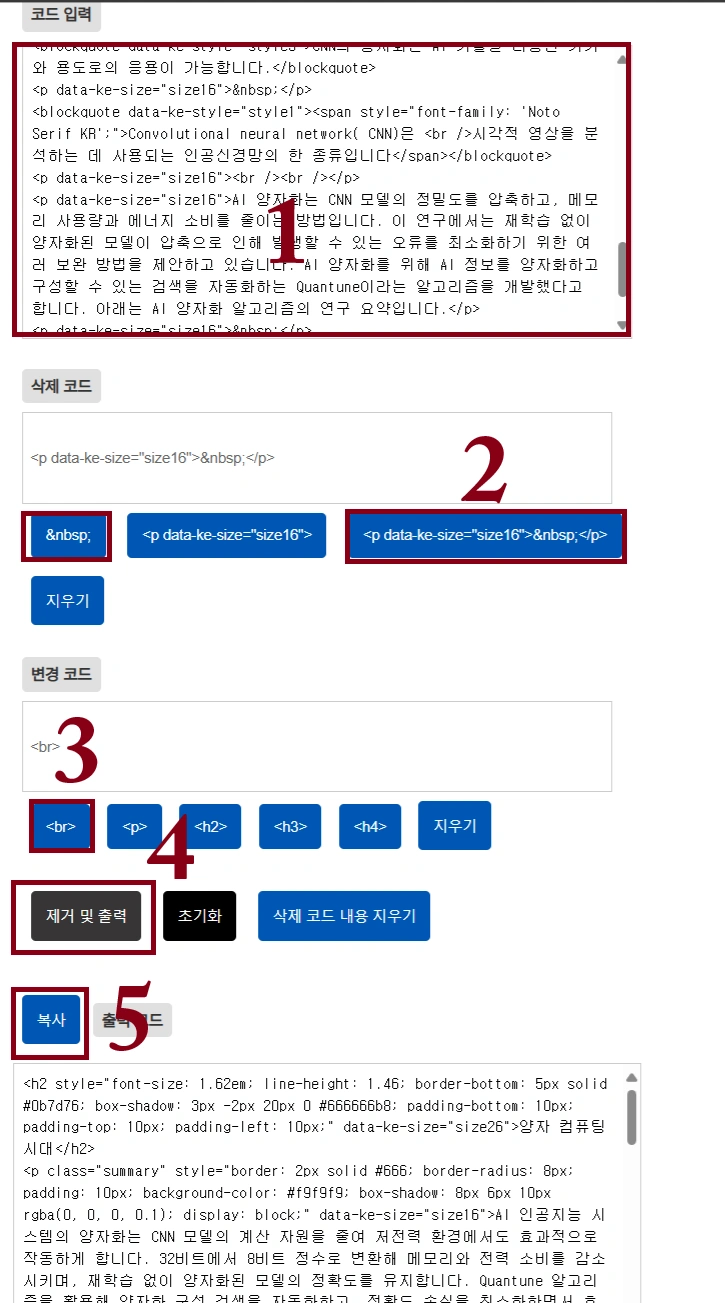
Be sure to perform a Code Check after writing a post for blog optimization. Simple code cleanup can help search engines index your pages more efficiently. Blog optimization starts with small changes. Induce more search exposure and traffic through efficient code cleanup!
What checks are necessary to optimize a blog post for SEO?
A code check is required to remove unnecessary HTML tags (e.g., duplicate span, div) or inline style codes from the written post. This improves page loading speed and increases search engine crawling efficiency.
What are the practical effects of removing unnecessary code from a blog?
Removing unnecessary code reduces the blog’s file size to speed up page loading, helps search engines identify the core of the content faster to improve Search Engine Optimization (SEO) rankings, and reduces the visitor bounce rate.
What method can be used if manual code editing is difficult?
By utilizing online code cleaner tools, you can automatically delete unnecessary code just by copying and pasting, and maintain a clean HTML structure. Additionally, you can easily organize code within the editor using Chrome extensions.