South Korea’s search market has a unique, “Galapagos-like” structure that cannot be found anywhere else in the world. However, if you dream of greater growth as a profitable blog operator or professional blogger, we must now look beyond the “frog in a well” fence of familiar domestic searches and look toward the massive global market of 1.5 billion people and Search Engine Optimization (SEO).
Today, I would like to introduce a method I have been testing recently. It is a reflection on operating a domestic blog that is free from the limitations of domestic searches and portals. In other words, it means global expansion. It may sound grand, but if it is possible, I believe there are infinite possibilities. It is about showcasing Korea’s status as an IT powerhouse to the world.
1. The Closed Nature of Korean Search Engines and the Limitations of the ‘Crucian Carp Farming’ System
For a long time, the domestic search market has been dominated by specific portals. It can be described as an ecosystem where content is used and then discarded, much like cute crucian carp that do not live long. However, this system adheres to a non-standard, closed method that is far from global standards (W3C) and web accessibility.

- Exclusion of External Domain Sites: Portals prioritize content from their own services (blogs, cafes) and have a strong tendency to intentionally exclude high-quality external content, such as Tistory or WordPress, from search results.
- Hindrance to Content Productivity and Creativity: This “crucian carp farm” structure forces creators to become buried only in domestic-limited trends, serving as a decisive obstacle that prevents high-quality information from having a global impact.
2. Tistory: Powerful Customization
If a domestic blog is a “standardized villa” that must move only within a fixed layout, Tistory and WordPress are “free-standing detached houses” where the owner controls everything from basic design to interior. This powerful freedom can be a core weapon for entering the global market and appearing at the top of overseas searches.
- Full Implementation of Technical SEO: Through direct HTML/CSS editing, you can apply advanced technical settings preferred by search algorithms, such as meta tag optimization, schema markup (JSON-LD) insertion, WebP image conversion, and lazy loading (Lazy Load).
- High-Value Global AdSense Model: By attracting advertisements from English-speaking countries, where the cost-per-click (CPC) is significantly higher than domestic ads, revenue is higher for the same amount of traffic.
- Professional Tech Branding and Portfolio Creation: Beyond simple daily records, you can build your own K-brand as a global repository for professional Korean-style content and your own unique experiences in specific fields.
3. The Scale of the 80 Million Domestic Market vs. the 1.5 Billion Global English Sphere
Statistically, there are about 80 million Korean speakers worldwide, but English is a global lingua franca used by more than 1.5 billion people. It is a massive blue ocean where the scale of potential customers and visitors differs by at least 20 times.
The value of the in-depth content we research and write day and night is too immense to be consumed only by domestic search keywords. If we target the global market, the lifespan of the content can be long-lasting.
How did musicians who used to stay in the local Korean market manage to conquer the Billboard charts? The secret lies in the active use of the “Global Standard Interface” called YouTube.
- Synergy of Borderless Platforms: Even subculture content that did not receive much attention or was niche in Korea gains global explosive power the moment it is uploaded to a global standard platform.
- Status of K-Contents & K-Tech: Currently, the thirst for South Korea’s IT technology and creative content is at its peak worldwide. You can immediately create organic traffic simply by providing the professional knowledge we possess through sophisticated English translation.
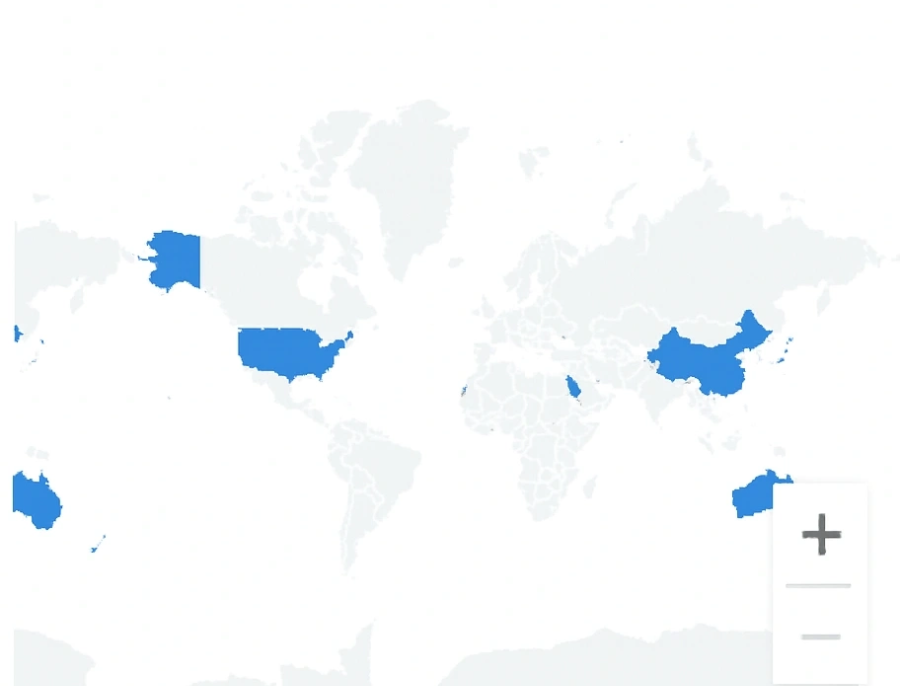
4. Is It Enough to Simply Install a Translator?
The question may arise: “I can’t speak English; is global inflow possible? Isn’t it enough to just attach a Chrome auto-translator?” However, let me be clear: you can never be exposed to overseas searches through simple machine translation and English-written content alone. This is because search algorithms distinguish very precisely between “content for English readers residing in Korea” and “professional content for globalizing the English-speaking world.”
1. Technical Limitations of Chrome Browser Basic Translation (NMT)
Translation performed by right-clicking in Chrome is a general neural machine translation method.
- Contextual Errors and Decline in Credibility: Especially when encountering highly professional terms like FPV drone PID tuning or SEO backlink strategies, they are replaced with incorrect words, damaging the professionalism of the content.
- Risk of Low-Quality Spam Classification: Google Search Console may classify pages with unnatural sentence structures as low-quality content and exclude them from indexing.
Translators installed at the top of a blog are almost meaningless. In the past, they helped improve accessibility for foreigners living in Korea, but now, web browsers themselves provide automatic translation functions, so the utility has significantly decreased. If you currently have a translator at the top of your blog that only hinders performance, remove it immediately.
2. Utilizing Generative AI Translation (Gemini, GPT-4o, etc.)
The latest Large Language Models (LLM) like Gemini perform “intelligent reasoning translation” that perfectly understands context and user intent, rather than simple conversion.
- Localization and Paraphrasing: It recreates content with nuances that native speakers actually type into search boxes, such as changing “재테크 노하우 (financial technology know-how)” to “Wealth Management Strategies.”
3. Comparison of Translation Strategies for Global Expansion
| Category | Chrome Basic Translation (Passive) | AI Intelligent Translation (Active) |
|---|---|---|
| Core Target | People wishing to simply check content | Native speakers wishing to acquire high-quality info |
| Sentence Quality | Stiff and mechanical literal translation | Natural and smooth native-like tone |
| Google Search Exposure | Very Low (Disadvantageous for indexing) | Very High (Keyword optimization possible) |
| Recommended Use | For personal reference | For global blog operation |
I am also aggressively proceeding with the work of English-izing all existing technical professional content and exposing it to the global market. You don’t need to be fluent in English. This is because we have the most powerful 24-hour personal assistant called AI.
- Assign a Persona to AI: “You are a senior IT technical translator with 15 years of experience from Silicon Valley.”
- Request Specific SEO Context: “Translate this FPV drone introduction in a native speaker style, including relevant technical keywords, so it appears at the top of search results.”
- Build a Tistory English Category: Utilize Tistory’s freedom to configure an independent English category and systematically turn your content into assets.
Break free from the narrow market of Korea. Communicate with readers worldwide and aim for Google’s massive traffic. I look forward to your Tistory blog becoming the most powerful global hub where your knowledge content spreads across the world.
Will everything be solved just by English-izing my content? Not at all. The most important key is designing a technical SEO strategy that ensures search engines accurately recognize the value of the English content I have written and expose it at the top of search results in the actual target region.
In the next post, I will share “Specific Indexing Methods and Automation Code to Forcefully Inform Google of Your English Content,” which anyone can apply immediately.